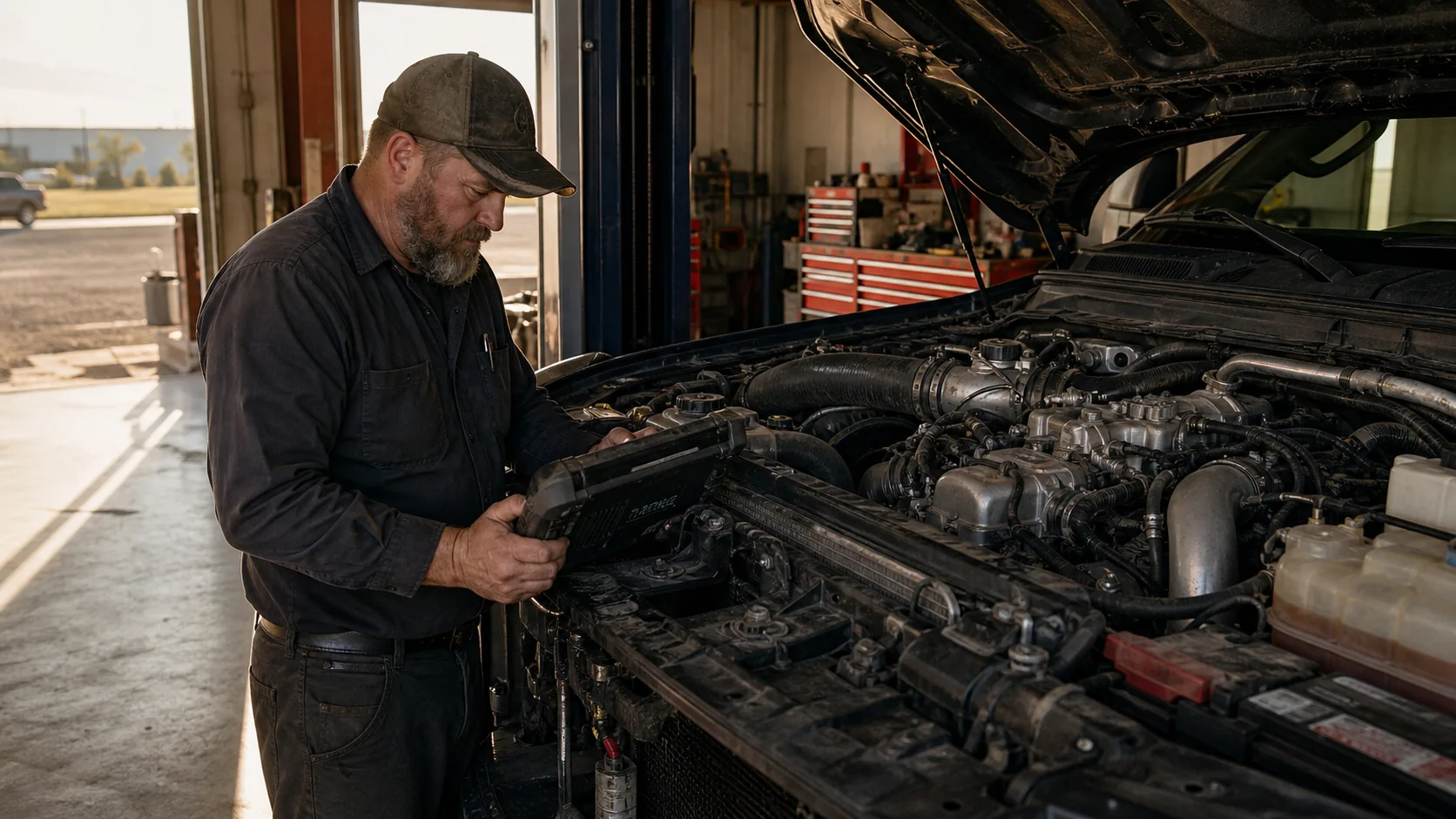
Why a trouble code is not a complete diagnosis
What codes, live data, circuit tests, pressures, and operating conditions reveal—and why a code description does not prove a part failed.
Read the guide →Diesel knowledge
Straightforward guidance for diesel owners, operators, and fleet managers—built to make the first service conversation more productive.
From the shop
Start with the symptom in front of you. Each guide explains what the warning can mean, what information is useful, and when continued driving is not worth the risk.
What codes, live data, circuit tests, pressures, and operating conditions reveal—and why a code description does not prove a part failed.
Read the guide →
Immediate safety steps, tow-versus-drive clues, common causes, and what to report after the engine cools.
Read guide →
How aftertreatment systems work together and why repeated forced regenerations may not solve the fault.
Read guide →
How heat, dust, idling, towing, loads, mileage, and engine hours should shape the service plan.
Read guide →
Hard starts, low power, smoke, rough running, contamination risk, and the tests that distinguish similar symptoms.
Read guide →
Why low boost, smoke, whistle, and lag do not always mean the turbocharger itself has failed.
Read guide →
Battery and cranking clues, other systems required for starting, and what to gather before service.
Read guide →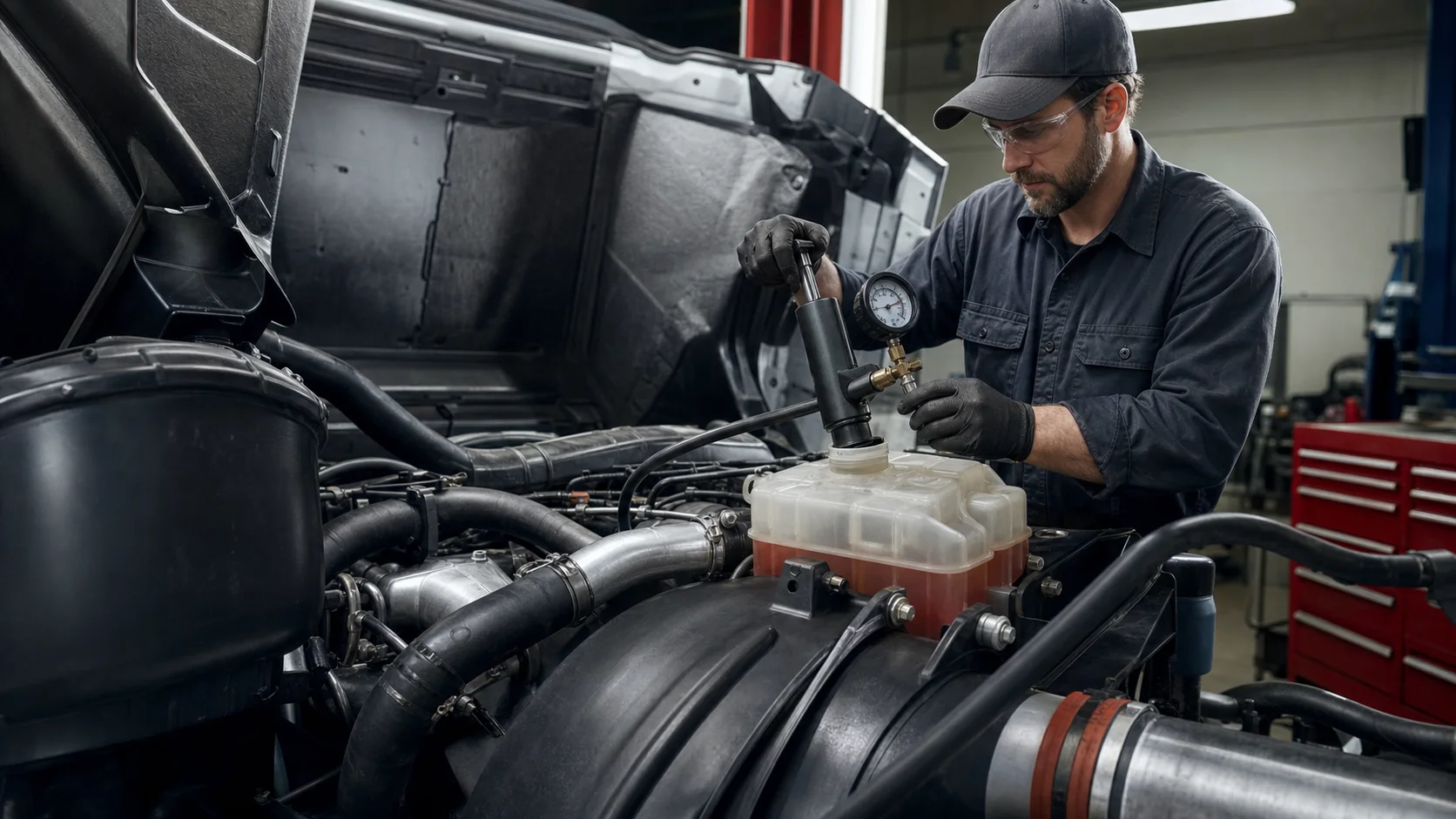
Coolant loss, residue, pressure, fan, hose, and temperature clues worth catching before a roadside stop.
Read guide →
Connect daily walkarounds, engine hours, repair priorities, records, and planned downtime.
Read guide →A useful starting point
An article can explain the system. It cannot diagnose a specific truck.
Send the year, make, model, engine, warning messages, symptoms, recent work, and whether the vehicle can be driven safely. We can use that context to begin the service conversation.
Describe your concern →