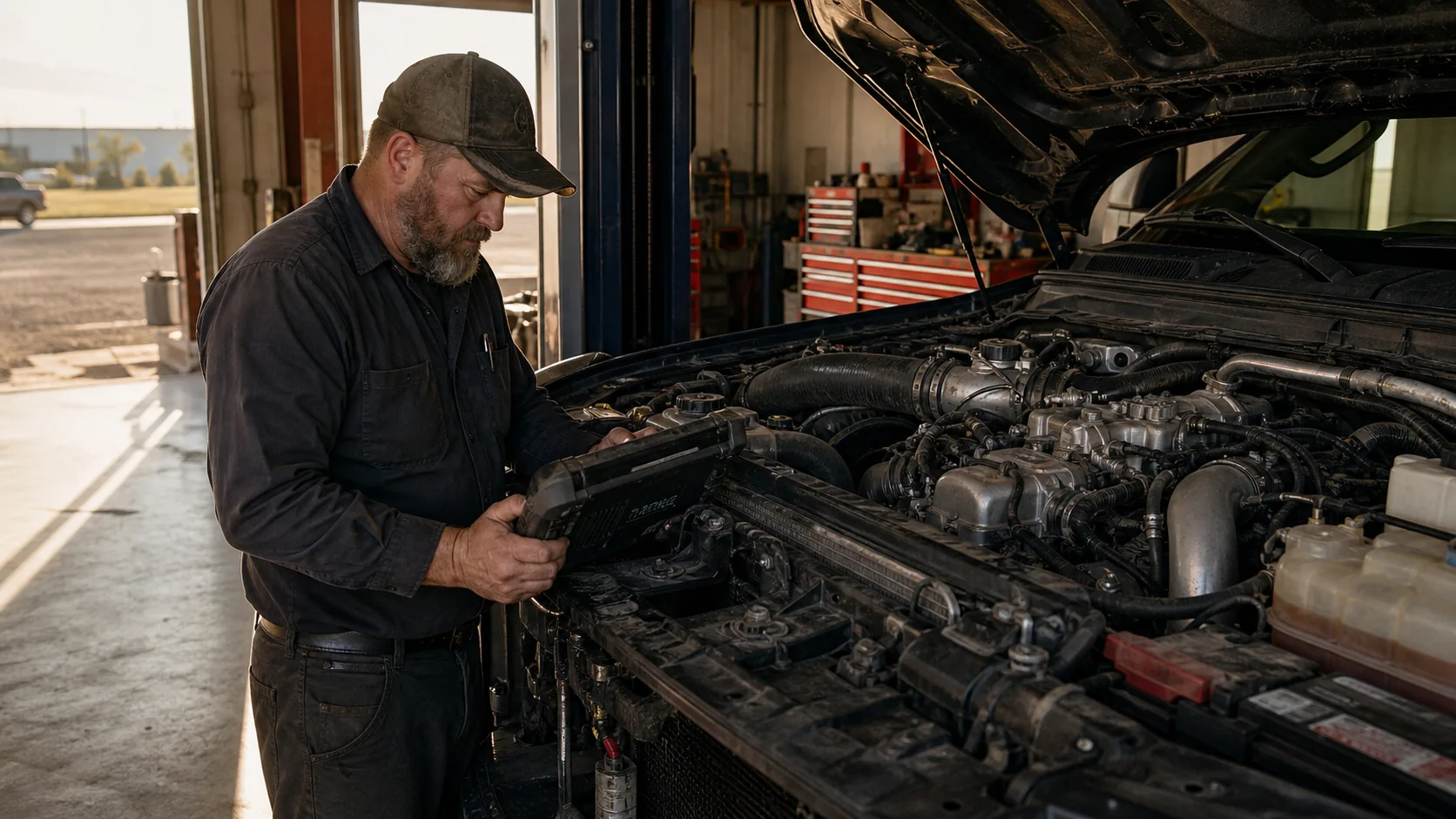
A diagnostic trouble code identifies the system or operating condition that noticed a problem. It does not automatically identify the failed part. The difference matters: replacing the component named in a code description can waste money, leave the real fault untouched, and sometimes create a second problem.
What a trouble code actually means
A truck's control modules constantly compare sensor signals, commanded actions, and expected results. When a value stays outside an allowed range long enough, the module records a code. That code is a starting point: it tells a technician which monitor failed and under what broad conditions.
For example, a low fuel-rail-pressure code confirms that measured pressure did not meet the commanded target. It does not, by itself, prove that the high-pressure pump failed. Restricted filters, supply-side air leaks, contaminated fuel, an inaccurate sensor, excessive injector return, wiring faults, or a genuine pump problem can produce a similar result.
It reports what the computer observed. Testing determines why it happened.
Why code-based parts replacement goes wrong
Code descriptions often include the name of a sensor, valve, or circuit because that is the area being monitored. The named component can be healthy while its signal is affected by a connector, ground, power supply, hose, restriction, leak, or mechanical condition elsewhere.
Clearing codes also removes useful context. Freeze-frame data may show engine load, coolant temperature, speed, voltage, pressure, and other values at the moment the fault set. That snapshot helps a technician reproduce an intermittent issue instead of guessing after the evidence is erased.
What a complete diagnostic process includes
The exact path changes with the vehicle and complaint, but a disciplined process normally includes:
- Confirming the customer's symptom and scanning every relevant module—not only the engine controller.
- Reviewing code status, freeze-frame information, history, and recent repairs.
- Checking service information and known system behavior for that engine and calibration.
- Comparing commanded values with live readings under the conditions that trigger the fault.
- Testing power, ground, signal integrity, pressures, flow, temperature, or mechanical condition as appropriate.
- Verifying the repair under comparable operating conditions before returning the truck.
A scan tool is important, but it is only one instrument. Electrical meters, pressure gauges, smoke testing, visual inspection, fluid sampling, and mechanical checks often provide the proof.
How to help the first service visit
Write down the exact warning message and when it appears. Note whether the truck was cold or hot, loaded or unloaded, idling or at highway speed. Mention recent fuel stops, jump-starts, maintenance, modifications, or repairs—even if they seem unrelated.
Avoid clearing codes or disconnecting the batteries immediately before service unless safety requires it. Preserving the stored information can shorten the diagnostic path. If the warning is red, oil pressure is lost, temperature is climbing, or the engine is running violently, shut down safely and arrange transport rather than continuing to test-drive it yourself.
This article provides general educational information, not a vehicle-specific diagnosis or a substitute for the manufacturer's safety and service procedures.