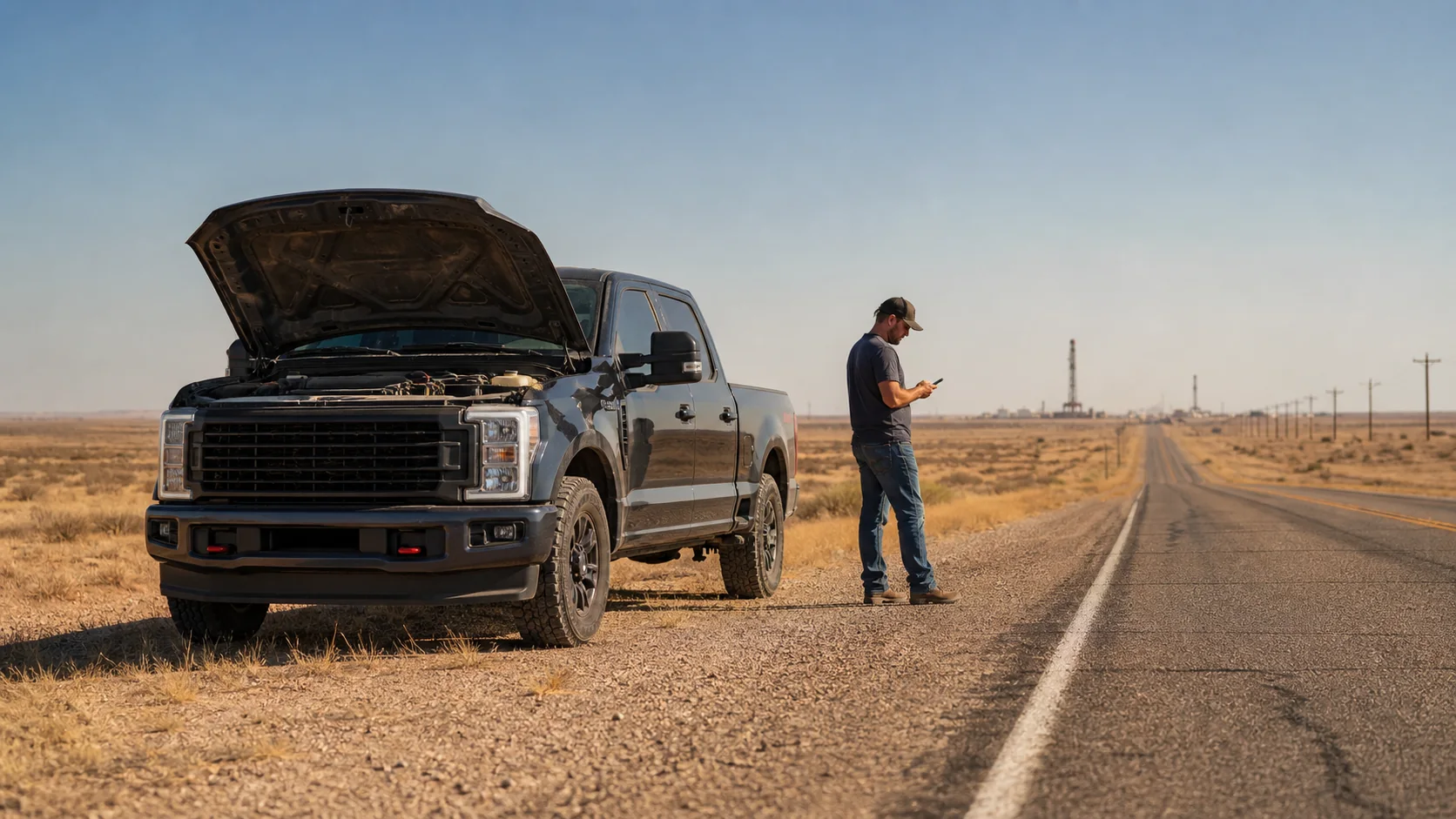
When the temperature gauge climbs or an overheat warning appears, the safest response is to reduce load and get the vehicle stopped in a safe place. Continuing to drive a hot diesel can turn a hose, fan, or coolant-flow problem into cylinder-head, gasket, piston, or turbocharger damage.
What to do in the first few minutes
- Turn off the air conditioning and safely reduce engine load.
- Move out of traffic and stop on firm, level ground as soon as practical.
- If the warning is severe, coolant is escaping, power drops, or the gauge stays high, shut the engine off.
- Set the parking brake, turn on hazard lights, and keep people away from traffic.
- Allow the engine to cool fully before any inspection.
A hot reservoir or radiator cap can release pressurized coolant and steam. Do not loosen it to “let pressure out.” Wait until the system is completely cool.
When the truck should be towed
Arrange a tow if coolant is pouring out, steam is present, the belt is missing, the fan has contacted the shroud, the engine knocks, oil pressure is abnormal, the truck repeatedly overheats, or you cannot confirm an adequate coolant level after everything is cold. A short drive is not automatically harmless; heavy load and combustion pressure can raise temperature quickly.
If a trailer or equipment is attached, tell the tow provider the combined situation and location. Do not attempt roadside work where traffic, unstable ground, or extreme heat makes it unsafe.
Common causes are not always obvious
Low coolant is a condition, not a complete diagnosis. The loss may come from a hose, radiator, reservoir, water pump, heater circuit, EGR cooler, cap, or internal engine leak. A truck can also overheat with a full reservoir because of restricted airflow, a weak fan clutch, thermostat trouble, a slipping belt, poor coolant circulation, debris between cooling stacks, or combustion gases entering the system.
West Texas dust can pack the spaces between the condenser, charge-air cooler, and radiator. The front surface may look acceptable while airflow deeper in the stack is restricted.
What to report to the repair shop
Record where the gauge normally sits, how rapidly it moved, outside temperature, road speed, load, grade, and whether the cab heater changed temperature. Note any odor, steam location, fluid color, warning messages, fan noise, or recent coolant work. Photos taken from a safe distance can help.
Do not top off a hot engine with cold water. Once cool, adding the correct coolant may help with safe loading or a controlled check, but it does not repair the leak or establish that the truck is safe to drive.
This article provides general educational information, not a vehicle-specific diagnosis or a substitute for the manufacturer's safety and service procedures.