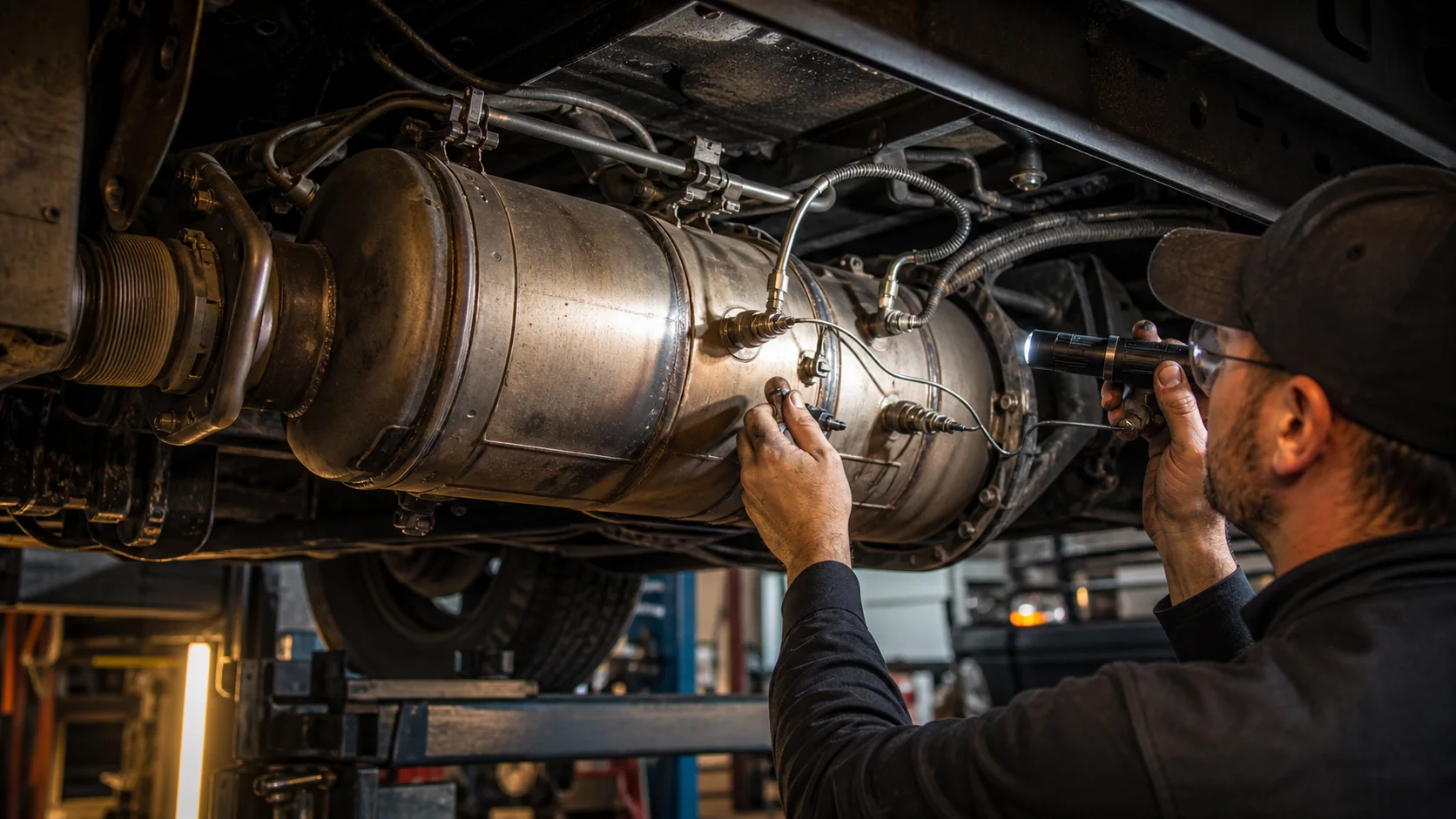
Modern diesel aftertreatment is a chain of connected systems. The diesel particulate filter captures soot, DEF supports NOx reduction in the SCR catalyst, and multiple sensors confirm that temperatures, pressures, dosing, and conversion are within range. A warning may begin with one part of that chain but affect the entire vehicle strategy.
What each system does
DPF and regeneration
The diesel particulate filter traps soot. During regeneration, exhaust temperature rises so accumulated soot can oxidize. Passive regeneration happens during favorable driving conditions; active regeneration uses engine controls to create the needed heat. Ash, unlike soot, does not burn away and eventually requires proper cleaning or service.
DEF and SCR
Diesel exhaust fluid is injected upstream of the selective catalytic reduction system. Under correct conditions it helps convert nitrogen oxides into less harmful compounds. DEF quality, temperature, dosing, sensor feedback, exhaust leaks, and catalyst condition all affect performance.
What warnings and derates are telling you
An initial light may indicate a detected fault or that regeneration is needed. Escalating messages, countdowns, and reduced-power modes are designed to protect equipment and maintain emissions compliance. The exact sequence varies by manufacturer, so the owner's manual is the authority for the symbols on a particular truck.
“Exhaust filter full,” “DEF quality,” and “service emissions system” point to different operating strategies. Photograph the complete message before cycling the key.
When a parked regeneration may not be the answer
A regeneration can address soot loading only when the system is otherwise capable of completing it. If a temperature sensor is implausible, differential-pressure data is unreliable, fuel or air control is faulty, the filter is ash-loaded or damaged, or the engine is producing excessive soot, forcing repeated regenerations may add heat without fixing the cause.
Never initiate a parked regeneration near dry grass, spilled fuel, structures, people, or combustible material. Exhaust temperatures can become extremely high. Follow the vehicle manufacturer's procedure and do not use regeneration as a substitute for diagnosis.
Reducing repeat aftertreatment trouble
Use the correct low-ash engine oil, keep air and fuel systems healthy, and avoid ignoring engine faults that increase soot. Store DEF sealed and clean; contamination by diesel, water, dirt, or the wrong fluid can damage the dosing system. Vehicles that idle extensively or rarely reach sustained operating temperature may need a maintenance plan based on hours and duty cycle rather than mileage alone.
A shop should evaluate the code history, soot and ash estimates, pressure data, temperature response, dosing performance, leaks, engine condition, and the duty cycle that preceded the warning.
This article provides general educational information, not a vehicle-specific diagnosis or a substitute for the manufacturer's safety and service procedures.