Cooling-system trouble often gives smaller clues before the gauge reaches the red. A sweet odor after shutdown, a low reservoir when cold, dried residue near a connection, a heater that changes temperature, or a fan that sounds different can justify inspection before the truck is loaded again.
Early clues to take seriously
- Coolant level dropping between cold checks.
- Crusty white, pink, orange, or green residue around seams, hoses, or fittings.
- A sweet smell, damp carpet, or windshield film from the heater circuit.
- Temperature that rises while towing, at idle, or with the air conditioning on.
- Cab heat that turns cool during an overheating event.
- A fan that never becomes noticeably louder under high heat—or stays engaged constantly.
Gauge movement varies by vehicle. Some dashboards damp small changes, so a warning can appear after temperature has already moved well beyond normal.
Why pressure and coolant condition matter
The pressure cap raises the coolant's boiling point and must seal correctly. A weak cap can release coolant early; excessive pressure can also be evidence of another fault. The correct coolant type and concentration protect against boiling, freezing, corrosion, erosion, and deposits. Mixing incompatible coolant technologies can reduce that protection.
Never remove a reservoir or radiator cap from a hot engine. “Warm” can still mean pressurized. Follow the owner's manual for the correct level and inspection point.
What a complete inspection can include
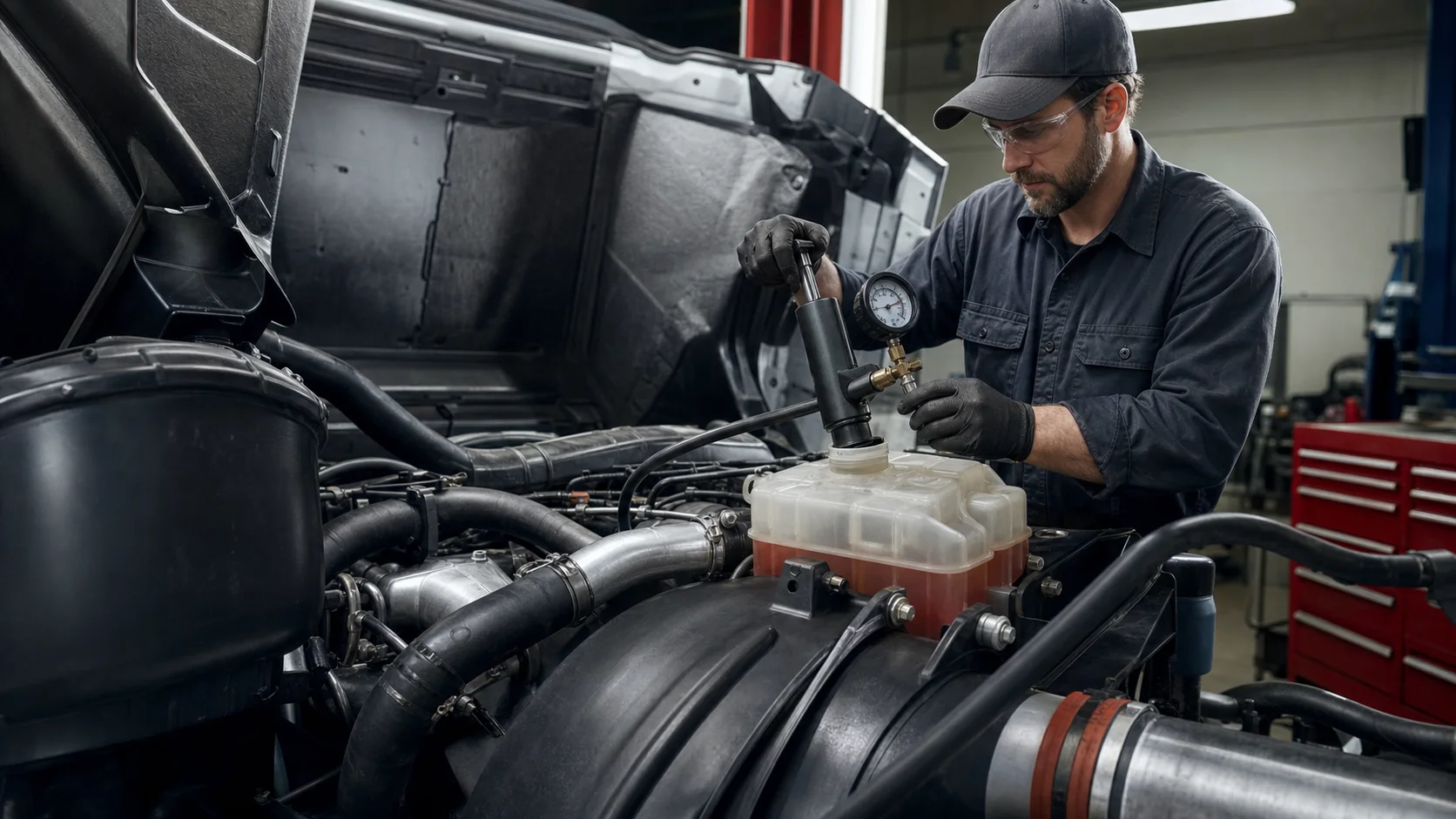
Depending on the complaint, a shop may inspect the cap, hoses, belt drive, fan and clutch, radiator, charge-air cooler, condenser, reservoir, water pump, heater circuit, oil and coolant condition, and visible EGR-cooling components. Pressure testing can reveal external loss. Vacuum fill behavior, temperature measurements, scan data, or combustion-gas checks may be appropriate.
Debris can lodge between stacked coolers where it is hard to see. Cleaning must avoid folding delicate fins or forcing material deeper into the stack.
Preventing a roadside overheat
Use the service interval and coolant specification for the exact engine. Inspect before peak summer and before heavy towing. Investigate repeated top-offs; coolant is not normally consumed like fuel. After cooling-system work, proper filling and air removal are important because trapped air can cause misleading level changes or hot spots.
If temperature begins climbing, follow the immediate safety steps in our overheating guide →.
This article provides general educational information, not a vehicle-specific diagnosis or a substitute for the manufacturer's safety and service procedures.