“It cranks” does not always mean it cranks fast enough. Diesel starting depends on adequate cranking speed, stable module voltage, correct position signals, sufficient fuel pressure, appropriate temperature inputs, compression, and—in cold conditions—proper intake-heater or glow-system operation.
Start by describing the exact symptom
Listen for whether the starter turns the engine at its normal speed. Does it click once, crank slowly, crank evenly but never fire, start and stall, or behave differently hot versus cold? Note dimming lights, rapid clicking, unusual smoke during cranking, security messages, and whether a jump changes the result.
Repeated long cranking can overheat the starter and drain batteries. Follow the manufacturer's cranking-time and rest limits rather than continuing until something fails.
Why battery condition matters even when it cranks
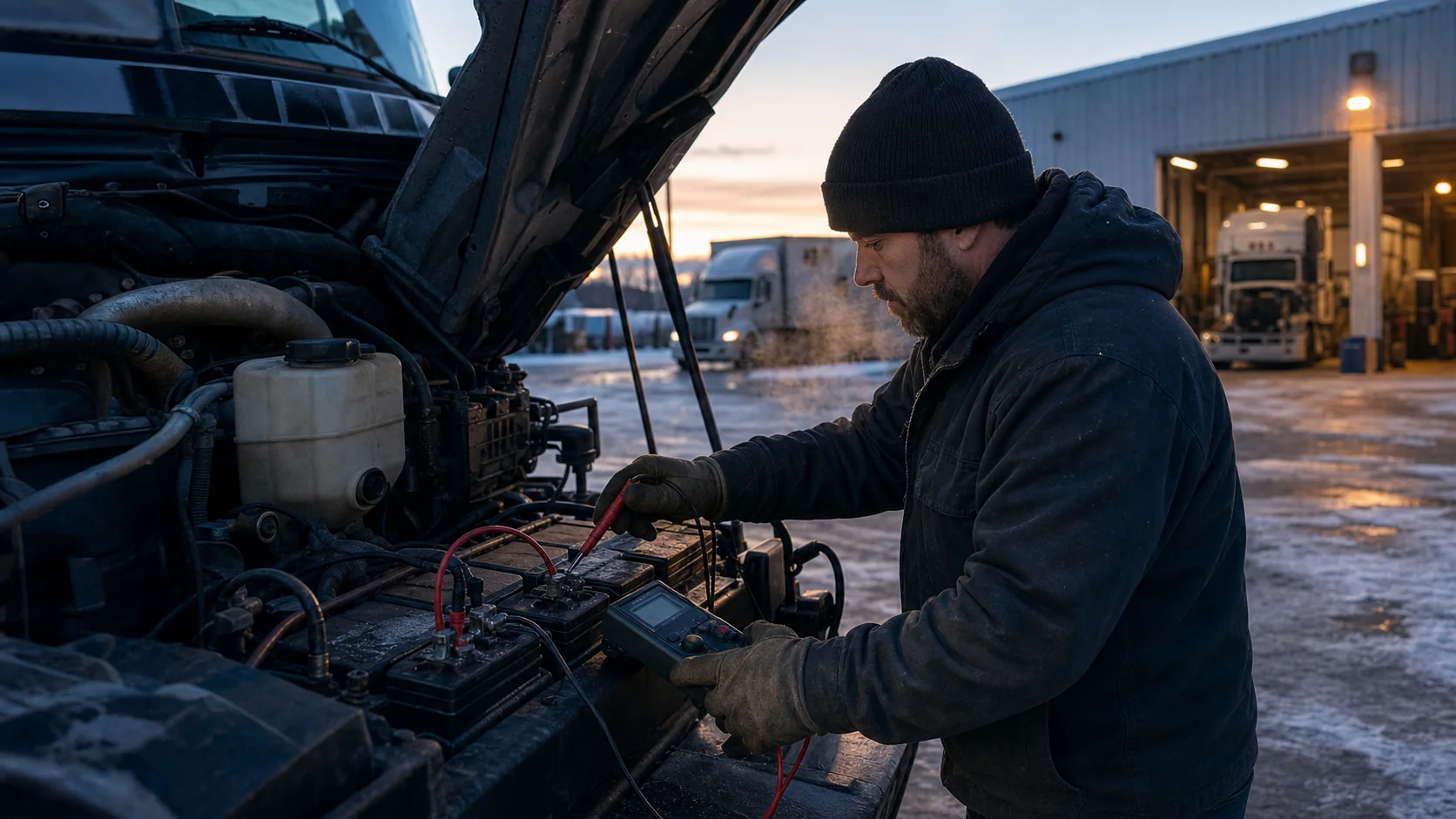
Many diesel trucks use two batteries. A weak unit, poor cable connection, hidden corrosion, or excessive voltage drop can reduce cranking speed and pull module voltage below the level needed for reliable control. Voltage at rest is only one clue; load testing and cable-drop measurements provide more useful evidence.
Use the vehicle manufacturer's connection sequence and approved points. Incorrect polarity can damage modules, and sparks near batteries can ignite gas. If a battery is frozen, swollen, leaking, or physically damaged, do not jump it.
Other systems required for starting
The control module must recognize engine speed and position, see plausible temperature and pressure data, and build the required fuel pressure. Air in the supply, a restricted filter, cold thickened fuel, sensor or wiring faults, anti-theft issues, and loss of compression can all prevent starting.
Exhaust color during cranking can offer context but is not a diagnosis. No smoke may suggest that little fuel is being delivered; white smoke may mean fuel is present but not burning properly. Temperature and engine design change the interpretation.
What to gather before service
Record ambient temperature, fuel level, recent battery or filter work, warning messages, and the last time the truck ran normally. Say whether it failed suddenly or became harder to start over several days. Avoid spraying starting fluid into a modern diesel; intake heaters or glow systems can ignite it unexpectedly, and uncontrolled combustion can cause engine damage.
If the vehicle is in a dangerous location or battery cables become hot, stop attempts and arrange professional help.
This article provides general educational information, not a vehicle-specific diagnosis or a substitute for the manufacturer's safety and service procedures.