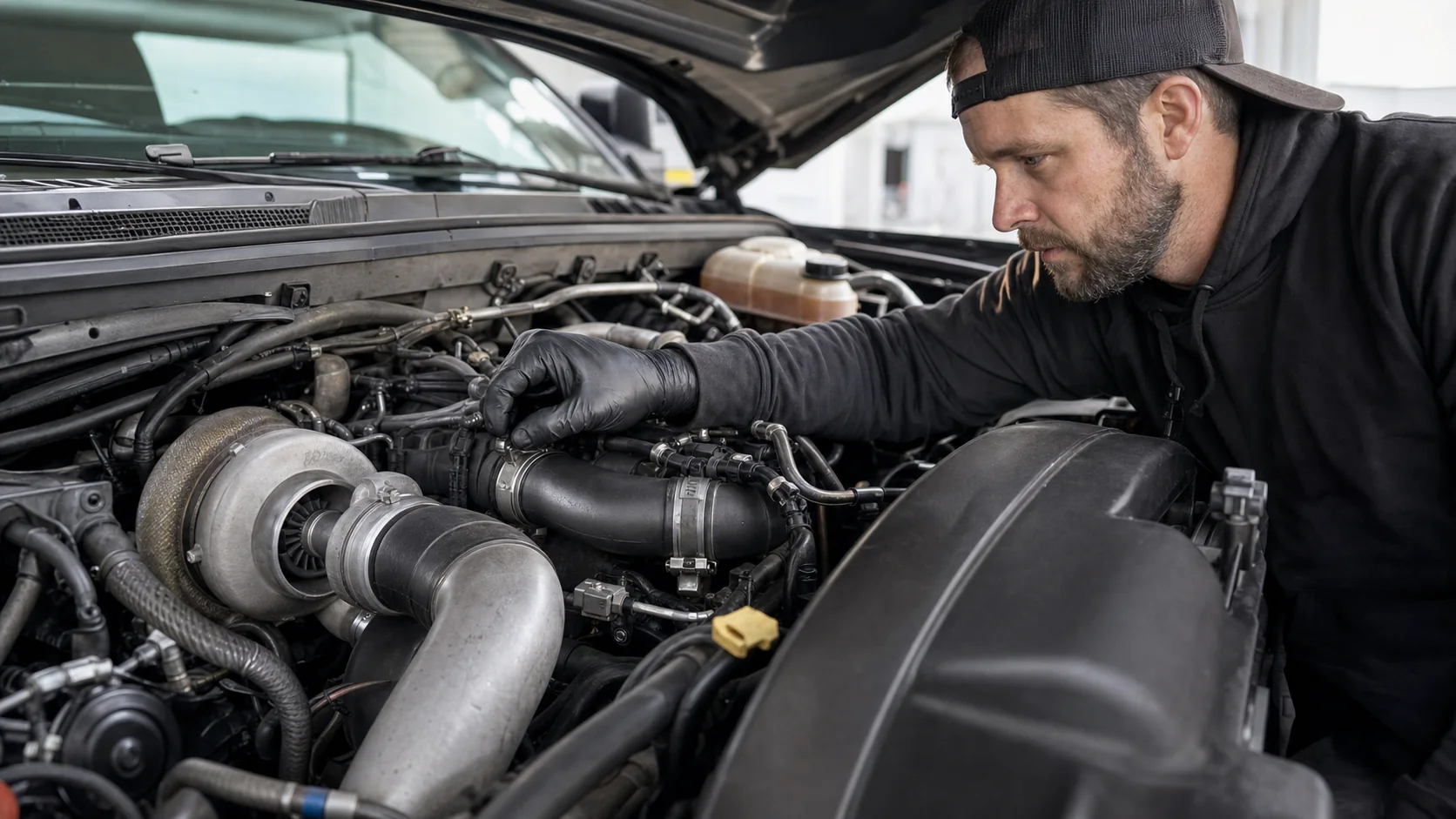
Low power and a boost-related code often get blamed on the turbocharger, but boost is the result of an entire air-management system. Intake restriction, charge-air leaks, exhaust leaks, sensor errors, actuator control, engine fueling, and aftertreatment restriction can all change what the turbo produces.
Symptoms worth documenting
Common complaints include slow response, reduced towing power, a new whistle or whoosh, black smoke under load, frequent regeneration, high exhaust temperature, oil residue near charge-air connections, or an underboost or overboost code. A sudden loud air sound followed by power loss may indicate a hose or boot that has separated.
Some oil film inside charge piping can be normal. Heavy accumulation, active dripping, rapid oil use, or blue smoke needs evaluation; appearance alone does not prove turbo failure.
The cause may be outside the turbo
- A plugged or damaged air filter and restricted inlet ducting.
- Split boots, loose clamps, cracked charge-air coolers, or leaking connections.
- Exhaust leakage upstream of the turbine.
- Faulty pressure, temperature, airflow, or exhaust-pressure information.
- Sticking variable-geometry vanes or actuator/control problems.
- Fuel, EGR, compression, or aftertreatment issues that alter airflow and energy.
Note whether a whistle follows engine speed, boost load, or road speed. A short recording made by a passenger can help; do not use a phone while driving.
How boost problems are diagnosed
A technician can compare desired and measured boost while also reviewing barometric pressure, airflow, exhaust pressure, actuator commands, and engine load. A stationary visual inspection may be followed by controlled smoke or pressure testing of the intake and charge-air tract. Exhaust leaks, sensor plausibility, wiring, and mechanical turbo condition are checked based on the findings.
Replacing a turbo without resolving an oil-supply restriction, contaminated oil, foreign-object entry, excessive crankcase pressure, or downstream restriction can damage the replacement.
When to stop driving
Shut down safely if the engine begins consuming oil uncontrollably, produces dense blue smoke, develops harsh metal contact sounds, loses oil pressure, or runs away above commanded speed. Do not place hands near belts, fans, or turbo plumbing with the engine running. If only a mild power change is present, avoid heavy load and arrange diagnosis before the symptom escalates.
This article provides general educational information, not a vehicle-specific diagnosis or a substitute for the manufacturer's safety and service procedures.