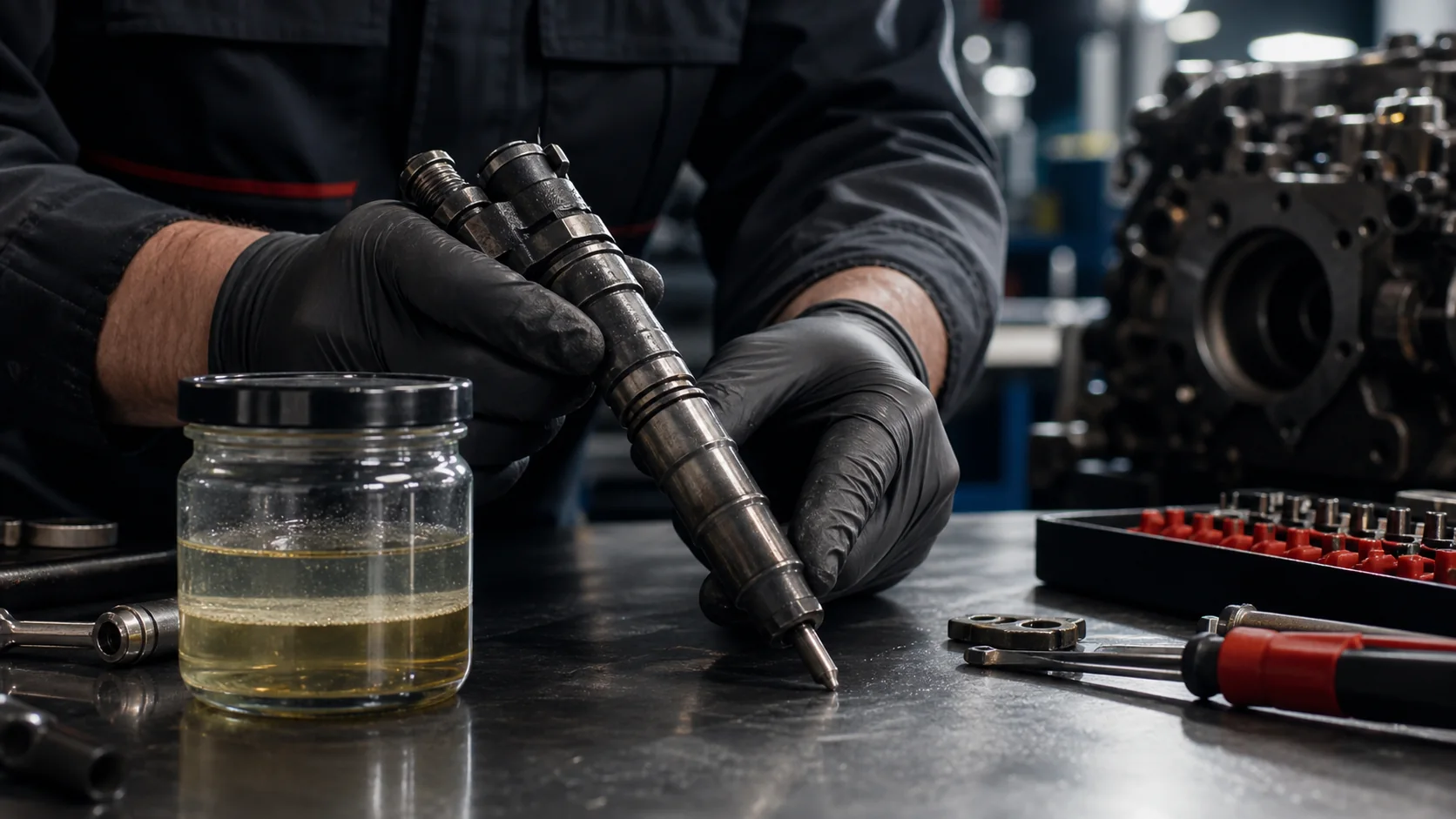
A diesel fuel system has to deliver clean fuel at the correct supply and injection pressure, at precisely controlled times. Small restrictions, air entry, water contamination, electrical faults, or injector wear can show up first as an occasional long crank or loss of power under load.
Common early warning signs
- Long cranking, especially after the truck sits or when the engine is hot.
- Uneven idle, hesitation, surging, or a new rattle.
- Power loss that becomes obvious while towing or accelerating.
- Unexpected black, white, or gray exhaust smoke.
- Frequent fuel-filter restriction messages or water-in-fuel warnings.
- Fuel odor, visible leakage, or an unexplained drop in fuel economy.
These symptoms overlap with air, electrical, compression, turbocharger, and emissions faults. Testing is needed before blaming injectors or a high-pressure pump.
Why contamination deserves a quick response
Modern high-pressure systems use extremely close tolerances and depend on fuel for lubrication. Water, gasoline, dirt, rust, or metal debris can damage more than one component. If the truck was misfueled, do not start it. If it is already running, stop safely and seek guidance.
Common-rail fuel can penetrate skin and cause a medical emergency. High-pressure diagnosis belongs to trained technicians using the correct depressurization and test procedures.
What a shop may test
Diagnosis can include a fuel sample, filter inspection, low-side supply pressure or vacuum, air-entry checks, commanded versus actual rail pressure, injector correction information, return-flow testing, electrical circuit checks, and inspection for metal. The correct sequence depends on the system and the evidence.
A failed component should prompt a cause check. Installing a new high-pressure part without addressing contaminated fuel, a restricted supply, or debris elsewhere in the system can lead to an expensive repeat failure.
How to protect the system
Buy fuel from reputable high-turnover stations, keep the cap and fill area clean, use filters and fluids that meet the vehicle specification, and follow the correct water-separator procedure. Avoid unapproved additives or mixing products casually; compatibility and concentration matter.
When a warning appears, record where you fueled, how much was added, ambient temperature, and whether the symptom changes with tank level or load. Keep the receipt if contamination is suspected.
This article provides general educational information, not a vehicle-specific diagnosis or a substitute for the manufacturer's safety and service procedures.